Marble and Stone in Furniture
Stone brings weight, cool touch and a sense of permanence to furniture. Choosing it well means understanding how different stones behave, which finish suits the use, and how much care the surface will ask for.
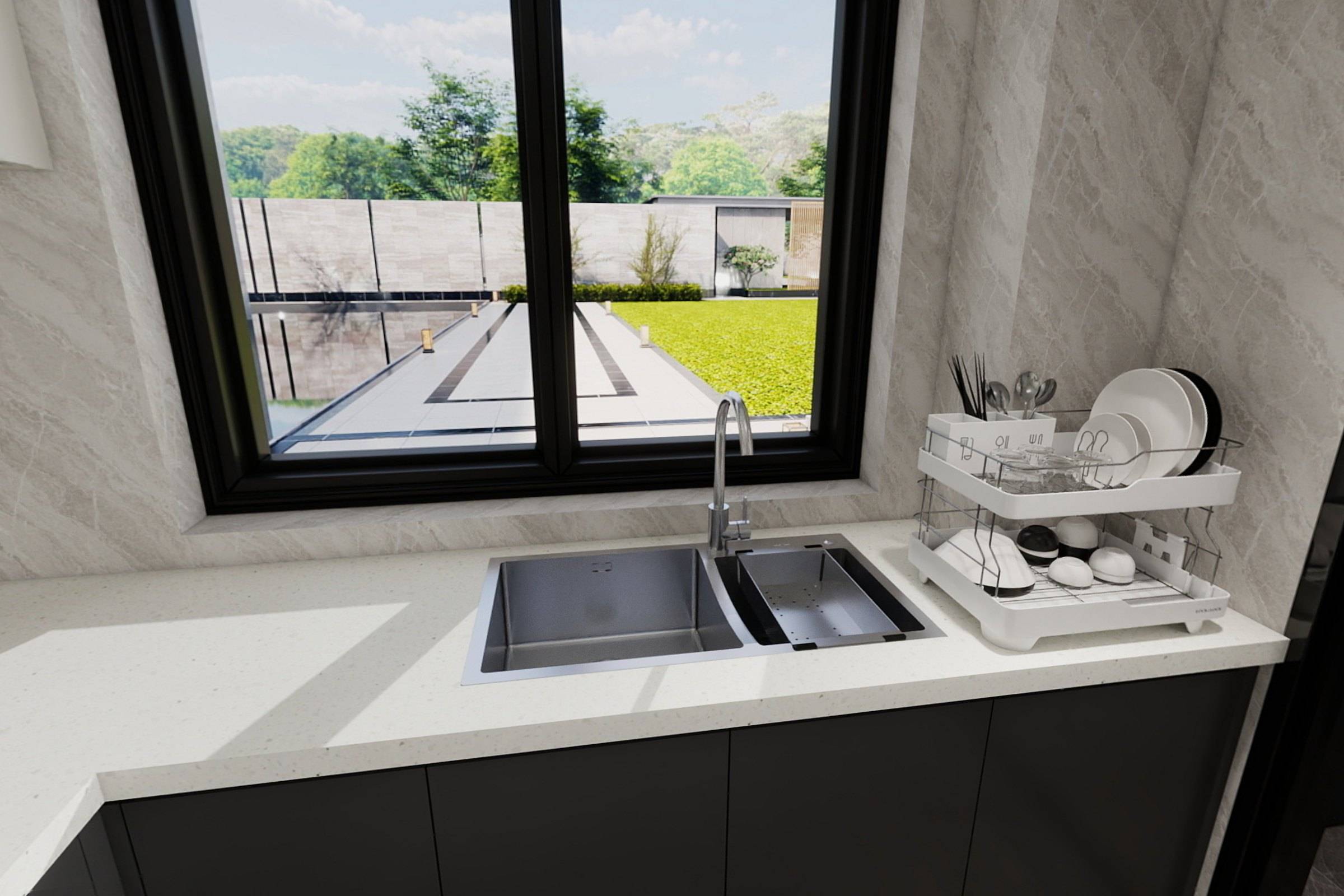
Marble and other natural stones are among the most striking materials a designer can use in furniture. A table top, a console or a cabinet front in stone changes the character of a room in a way timber or upholstery cannot. But stone is not one material. Different stones differ widely in hardness, porosity and response to acids, and the same stone can look very different depending on its finish. Choosing well means matching the stone to the way the piece will be used, and understanding the care it will need.
This guide sets out how we think about stone as part of custom furniture: the main types, the finishes, where stone works best, and how to look after it.
Marble, granite, limestone and others
Marble is a metamorphosed limestone, prized for its veining and its soft, luminous surface. It is attractive and sculptural, but it is relatively soft and reacts to acids. Lemon juice, vinegar, wine and some cleaning products can etch its polished surface, leaving dull marks that need professional refinishing. Many marbles are used for tables and feature panels because the appearance outweighs the need for extreme durability.
Granite is harder and more resistant to scratching and acidic spills, which makes it a practical choice for surfaces that take heavy use. Its patterns are typically flecked or speckled rather than veined. Limestone and travertine are softer and more porous, with a textured, natural look that suits calm, earthy schemes. Travertine in particular has visible pores that are often filled during finishing, and those openings collect dirt if not maintained. Quartzite, a metamorphosed sandstone, is very hard and can display marble-like veining, which makes it a useful alternative where the look of marble is wanted with better resistance.
Onyx and other translucent stones are used sparingly. They glow when backlit, which is spectacular in a niche or a light panel, but they are fragile and best kept away from heavy loads or knocks. A stone should always be chosen as a piece, not only as a name: two slabs of the same type can vary considerably in colour and veining.
Choosing a finish
The finish changes both the look and the performance of a stone. A polished finish gives the deepest colour and the most reflective surface, and it shows the veining at its most vivid. It is also the finish most affected by etching, because acids dull the polish directly. A honed finish is matt and softer; it reduces glare, hides fine marks more readily and suits a calm room. A leathered or brushed finish has a gentle texture that feels pleasant to touch and conceals wear well, which makes it a good choice for dining tables and busy surfaces.
Edges matter as much as the face. A sharp, squared edge looks precise but is more vulnerable to chipping; a softened or rounded edge is more forgiving and feels comfortable against the body. Thickness also changes the character of a table. A thin top appears light, while a thicker one gives a monumental presence and needs a stronger, more deliberate base.
Where stone works best in furniture
Stone is most successful where its weight, coolness and permanence are assets. Dining tables and islands are classic uses, because the surface is always in view and benefits from a substantial presence. Side tables, consoles and plinths can carry a single stone element into a room without making it heavy. Cabinet fronts, display niches and shelving can be lit from behind, which reveals the translucence and figure of the stone in the evening.
The stone-topped table in the Garden Residence works as an example: the stone is one element in a palette of timber, leather and soft textiles, and it sets the tone of the dining area. Stone is also used with restraint in the Ivory Apartment, where marble appears in the kitchen and the study.
Stone is less suitable where weight matters. Furniture that must be moved often, lifted up stairs or placed on floors that cannot carry the load should be designed in a lighter material, or the stone should be limited to a thin, well-supported element. Structural support is important for any large stone top: the base must be designed to carry the weight without flexing, and the fixings must allow for the natural movement of the material.
Caring for stone over time
Stone is durable, but not indestructible. Its care depends on the type and the finish. As a general approach, wipe spills promptly, especially acidic ones, and use coasters under glasses and hot dishes. Avoid harsh abrasives and acidic cleaners; a soft cloth with a pH-neutral cleaner recommended by the maker is usually enough. Where a stone has been sealed, the sealer should be reapplied as the maker advises, since sealing slows staining but does not make the surface impervious.
- Use a pH-neutral cleaner and a soft cloth, rather than abrasives or vinegar-based products.
- Wipe up acidic spills, such as citrus, wine and tomato, quickly rather than leaving them to dry.
- Use coasters, placemats and trivets to protect the surface from rings and heat.
- Ask the maker how often the stone should be resealed, and keep a record of it.
- Arrange for professional refinishing if the surface becomes etched or dull.
Expect some change over time. Natural stone is not uniform, and light and use will alter its appearance slightly. Many people value this as part of the material's character, but it is worth discussing with a maker before ordering, so that the expectations match the reality of the stone.
Pairing stone with other materials
Stone pairs well with timber, which balances its coolness with warmth and grain. Oak and walnut bases make a natural counterpoint to a veined top. Metal, in bronze or dark tones, adds a precise, architectural detail at the base or the edge. Leather and wool upholstery soften the hardness of stone in a dining room. The minimal kitchen in the Garden Residence shows how a pale stone worktop can sit within timber and soft, neutral surfaces without competing with them.
A checklist before you choose
- Decide how the piece will be used, and how often it will be touched, moved or cleaned.
- Compare the hardness and acid sensitivity of the stone, not only its appearance.
- Choose a finish that suits the level of care you are prepared to give.
- Look at full slabs, not small samples, since veining and colour vary across a piece.
- Confirm the structural base, the weight and the fixings with the maker.
- Ask how the stone should be cleaned and resealed, and write it down.
Stone rewards careful selection. If you are considering a stone piece for your home, start a project with a note of how the piece will be used and a photograph of the room. We can help you choose the stone, finish and base, and design the piece in relation to the rest of the room, through our bespoke furniture work.
Continue reading
Tell us about your space.
Share your floor plan, room photographs and what you hope to create.