How Much Does Custom Furniture Cost?
There is no single price for custom furniture, because there is no single piece. But the factors that determine cost are consistent, and understanding them makes budgeting far easier.
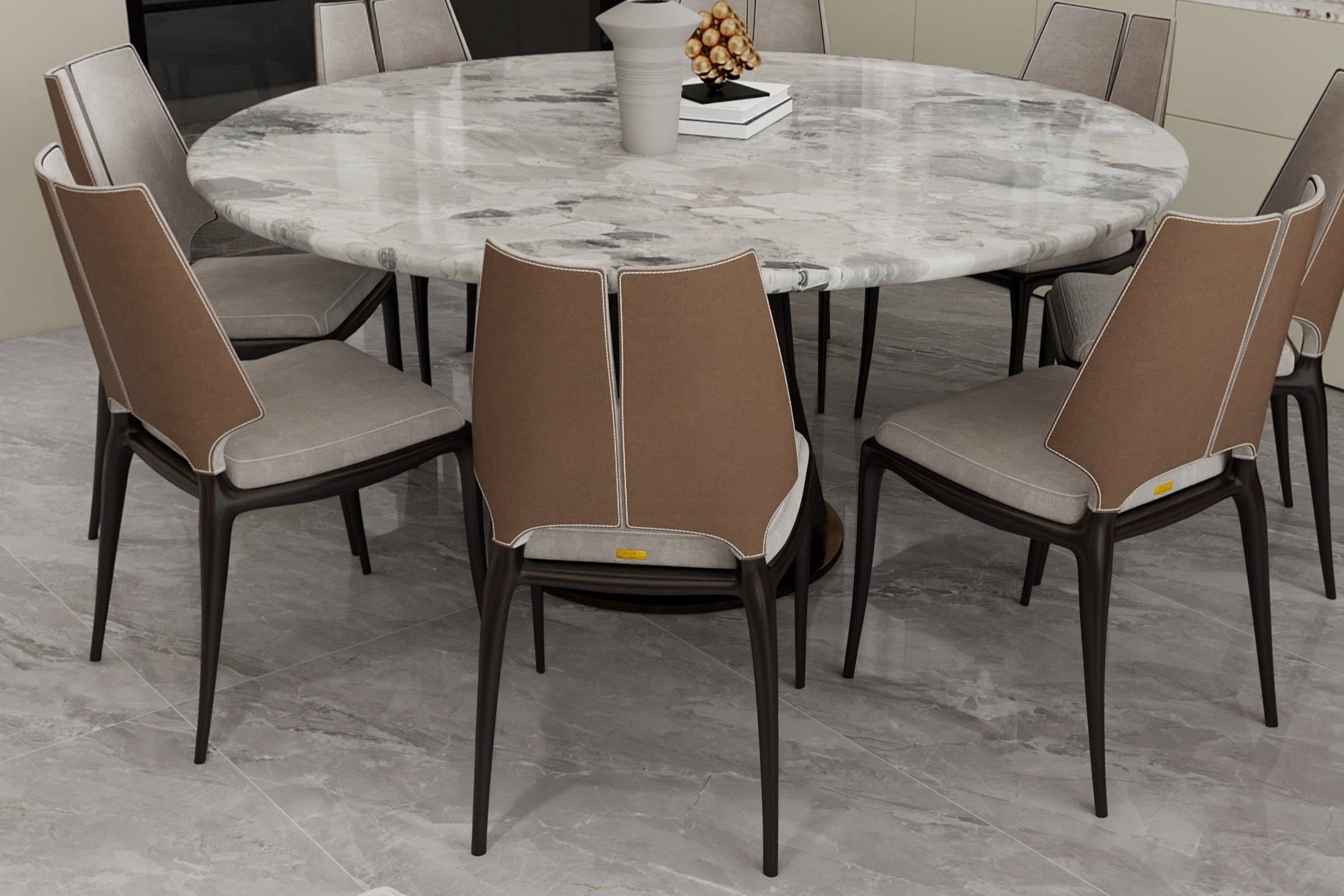
Ask ten makers what a custom dining table costs and you will get ten different answers — not because anyone is being evasive, but because “a dining table” can mean a simple timber top on four legs or a three-metre slab of book-matched stone on a sculpted base. The useful question is not “how much?” but “what drives the price?”
1. Size and quantity of material
The most obvious driver is the amount of material. A larger table uses more timber or stone, but cost does not rise in a straight line: beyond certain sizes, suitable boards and slabs become scarcer, heavier to handle and harder to transport. A table for twelve is usually more than double the cost of a table for six.
2. Choice of material
Materials vary enormously. Among timbers, darker, more figured woods and carefully matched veneers cost more than plain, even-grained stock. Stone ranges from widely available surfaces to rare slabs selected individually. Leather, metal finishes and textiles have similar ranges. Our material library explains how we use each.
3. Construction and complexity
Curves, tapered legs, hidden joints, integrated lighting, soft-close mechanisms and complex upholstery all add labour. A cabinet with flush, handle-less doors and precise shadow gaps takes more time to make — and to fit — than one with applied handles. Complexity is often where the character of a piece comes from, so it is worth deciding deliberately where to invest.
4. Finish
Multi-coat lacquers, hand-rubbed oils, patinated metals and hand-finished stone edges all take time. The right finish depends on use: a dining table needs more protection than a wall panel.
5. Design and development
A bespoke piece involves design time — drawings, samples, revisions, sometimes 3D visualisations — before anything is made. For a single piece this can be a significant share of the cost; across a whole-home project it is spread over many pieces.
6. Packing, freight and delivery
Large, heavy or fragile pieces need protective crating and careful handling. International delivery adds freight, customs and local delivery. Installation, where needed, is a separate line — and can be coordinated with qualified local partners where available.
How to plan a budget
- Decide which pieces matter most — usually the ones you touch and see every day — and allocate more there.
- Share a realistic range early. It allows a designer to recommend materials and details that make the most of it.
- Consider the whole room. A modest budget spread across a coherent scheme often looks better than one expensive piece among compromises.
- Ask what is included: design, samples, packing, delivery and installation are sometimes quoted separately.
When you start a project with us, we ask for an approximate budget range for exactly this reason — so that our recommendations fit your expectations from the first conversation.
Continue reading
Tell us about your space.
Share your floor plan, room photographs and what you hope to create.