How to Layer Lighting in a Living Room
A living room lit from a single ceiling fitting feels flat and unfinished. Layering several sources of light, each with a job, is what makes a room comfortable at every hour.
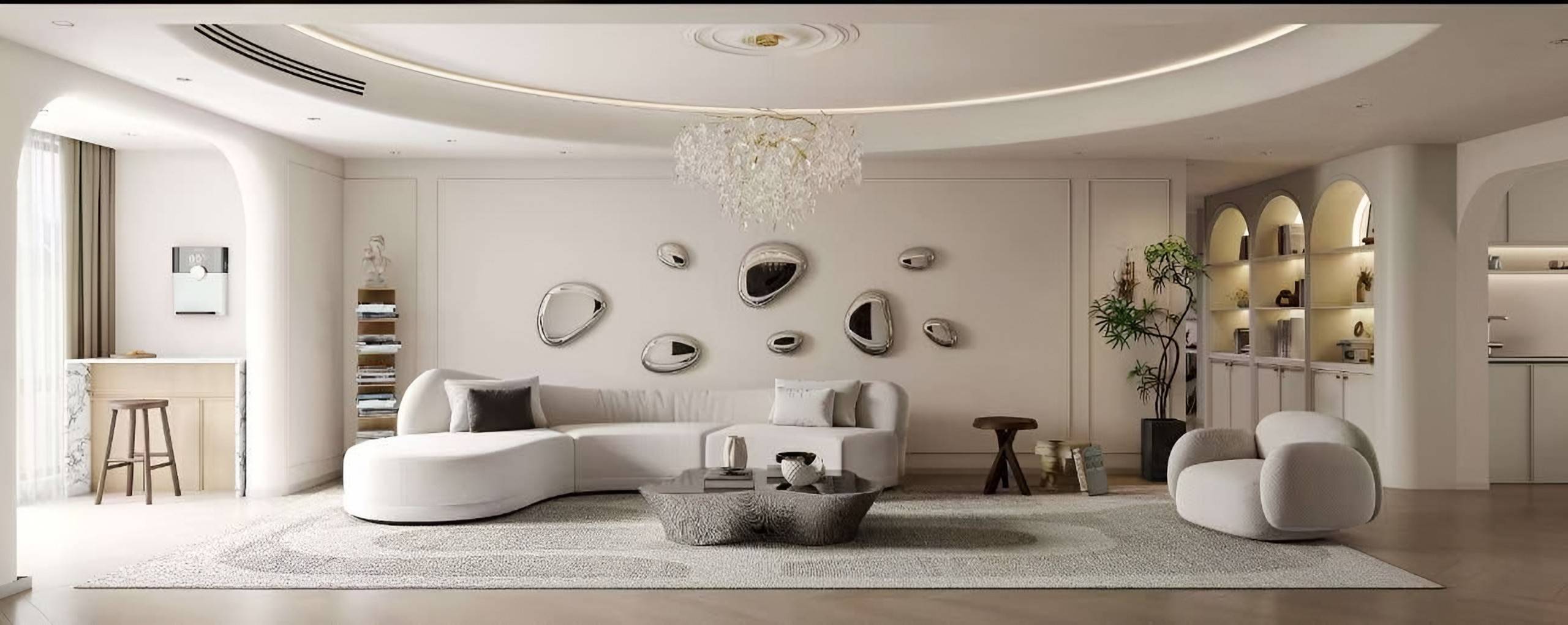
To layer lighting in a living room, plan three kinds of light separately and then combine them: ambient light to fill the room evenly, task light for specific activities such as reading or working, and accent light to shape the room and draw the eye to what you value. Each layer should be controllable on its own, so that the room can feel bright for a gathering and calm for an evening alone. The most common lighting problem is not too little light, but a room that has only one layer of it.
This guide sets out how we plan lighting alongside the furniture, sofa and joinery when designing custom living room furniture, and what to decide before the electrician arrives.
Plan the furniture first, then the light
Lighting follows the way the room is used. Before choosing any fitting, mark the sofa, armchairs, coffee table, rug and any sideboards on a floor plan, and note where people sit, read, work and talk. Lamps and fittings are then placed in relation to those positions. A reading chair needs light beside it and over the shoulder; a sofa needs a lamp at a height that lights a book rather than the eyes; a room with a dining table at one end needs a pendant over that table rather than a general ceiling light that leaves it in shadow.
- Mark each seat and where a person's head sits when they are sitting down.
- Note the positions of windows and how they will be dressed, since daylight changes the lighting needs of the room.
- Identify the one or two activities that need the most light, such as reading, writing or a dining table.
- Decide whether the room will be used mainly in the evening, which changes how much ambient light is needed.
Ambient light: the base layer
Ambient light is the general illumination that makes a room feel evenly lit and safe to move around. It usually comes from ceiling fittings, recessed downlights, wall washers or a central pendant, and it should be soft and diffused rather than glaring. The aim is to avoid harsh pools of light and dark corners, so that the room reads as one space. In many living rooms a combination of a few discreet ceiling sources, dimmed low, gives a better result than a single bright fitting in the middle.
Ceiling height and the shape of the room matter here. A high, coffered or vaulted ceiling can be lit from above with concealed sources that bounce light off the surface, giving a warm, even glow without a visible fitting. In a lower room, recessed options keep the ceiling clean. Whatever you choose, ambient light is best arranged on dimmers so it can be lowered in the evening without changing the character of the room.
Task light: where you actually need to see
Task light is focused light for a specific activity. In a living room this usually means lamps beside reading chairs and sofas, a floor lamp at the end of a sofa, or a small, adjustable desk lamp in a study corner. A good task light places the light source to the side or slightly behind the reader, at a height where the bulb is hidden from the direct line of sight, and it throws light down onto the page or surface rather than into the eyes.
- Place reading lamps so the light falls over the shoulder, not straight in front of the face.
- Choose shades that hide the bulb when seated and that diffuse the light evenly.
- Keep cables routed neatly along the wall or into the floor, and plan sockets before the furniture is fixed.
- Consider a lamp on each side of a sofa, so the room balances and two people can read at once.
Accent light: shaping the room
Accent light is the layer that gives a room its character. It is directed at things: a painting, a sculptural object, a stone wall, a timber panel, a display of ceramics, or the texture of a plaster ceiling. Accent lighting works by contrast. When the surrounding room is lit more softly, a small, focused source on a feature draws attention to it, and the room gains depth. Spotlights with narrow beams, picture lights and wall-mounted lamps are typical sources; they should be aimed carefully so that they do not shine directly into the eye from the seating.
The effect is most striking when accent light is applied to materials that reveal it well. Veined stone, timber with a strong grain and textured plaster take light beautifully, and they make the room feel richer after dark. Keep the number of accent points deliberate. A few well-placed lights on the things that matter are more effective than many small ones spread evenly across the walls.
Integrated joinery lighting
Built-in joinery offers some of the most refined lighting in a living room. Linear lights set into the underside of shelves, behind a cornice, or inside a display niche can make a wall of storage appear to glow, and they reveal objects without a visible fitting. Lit shelving is particularly effective in arched or curved openings, as in the Ivory Living Room, where lit arches frame the room and the mirrors and objects on display.
Joinery lighting needs to be planned with the cabinetry, not added afterwards. The position of the light source determines whether it appears as a bright line or a soft wash, and it affects how the shelves are built. Concealed lights need access for maintenance, heat must be able to escape, and the wiring must be routed before the carcass is closed. Electrical work should be carried out by a qualified electrician, and we coordinate the lighting layout with them as part of the wider joinery design.
Colour temperature and dimming
The colour of light changes how a room feels more than most people expect. Warm white light, often in the range of around 2700 to 3000 Kelvin, flatters timber, leather and textiles and suits most living rooms. Cooler light can feel crisp and suits working areas, but in a living room it can make materials look cold. It is sensible to choose one colour temperature for the whole room, and to check it on samples of the materials you are using, because the same light can make a stone or a fabric look very different.
Dimming is equally important. Every layer should be dimmable, and the controls should be placed where they are easy to reach from the sofa and the entrance. A scene that lowers the ambient and accent light while keeping a reading lamp at full strength is one of the simplest ways to make a room feel right in the evening.
Common mistakes to avoid
- Relying on a single ceiling fitting, which leaves the room flat and the seating in shadow.
- Placing lamps where they glare into the eyes of anyone sitting down.
- Planning sockets and switches after the furniture is already fixed.
- Mixing colour temperatures so that different fittings look yellow, white and blue in the same room.
- Adding joinery lighting without access for maintenance or ventilation.
A simple planning sequence
- Map the furniture, seating and activities on a floor plan.
- Decide the ambient strategy and the number of ceiling sources.
- Place task lamps for each seat and activity, and confirm socket positions.
- Choose accent points on the features worth emphasising.
- Plan any integrated joinery lighting with the cabinetry.
- Set the colour temperature, dimming and scene controls.
- Test the arrangement at night with a temporary lamp before fixing anything.
The Garden Residence shows how a few layers can work together in a single open space, with a ring pendant over the dining table and softer light around the lounge. If you are planning a living room, tell us about your space. We will look at the furniture, the way you use the room and the joinery, and recommend a lighting strategy that fits the design, from the first sketch to the final scene.
Continue reading
Tell us about your space.
Share your floor plan, room photographs and what you hope to create.