How to Choose a Sofa for Your Living Room
The sofa is usually the largest piece in a living room and the one you use most. Its size, depth and upholstery shape how the whole room feels, so it is worth choosing deliberately.
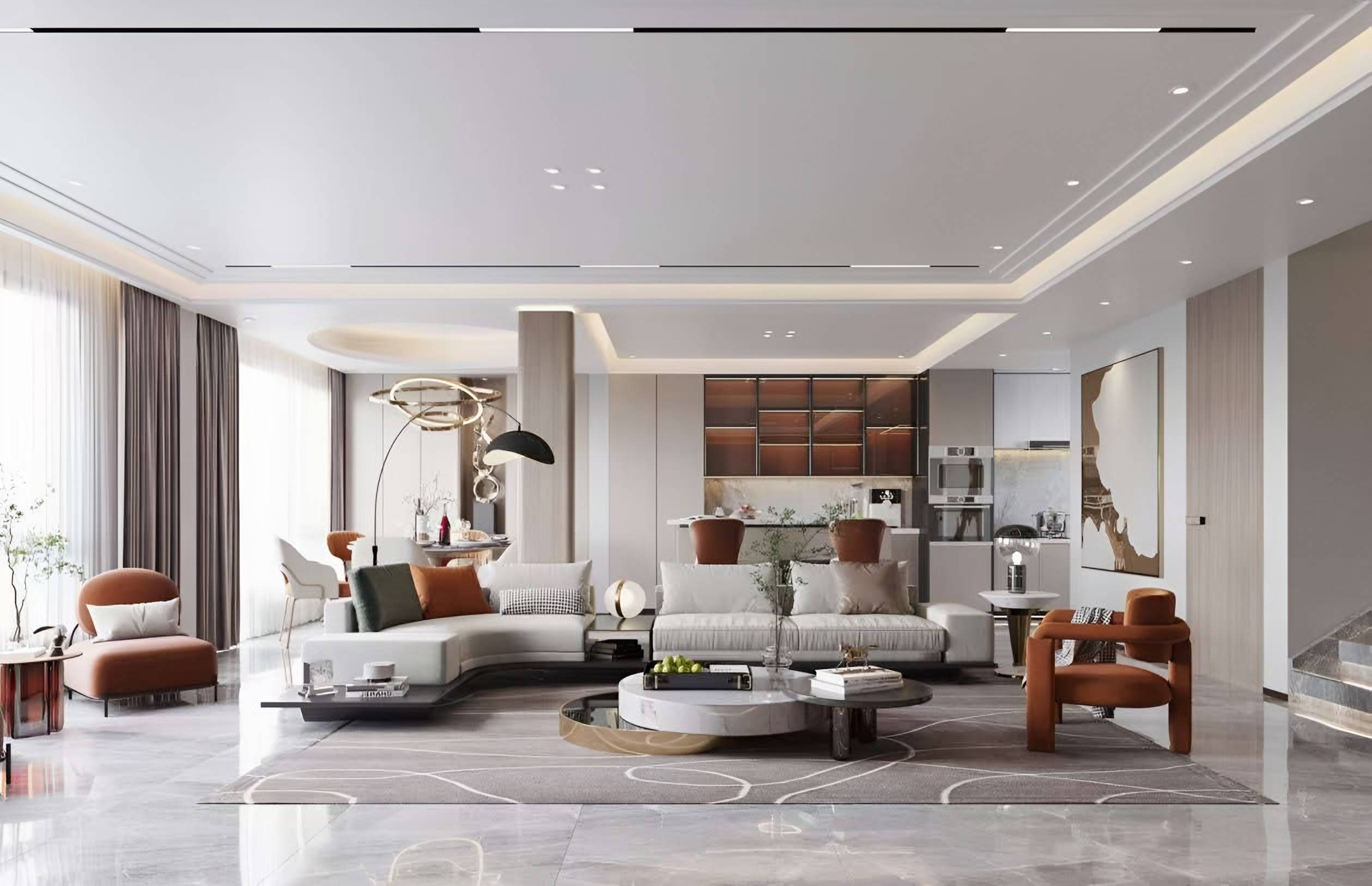
To choose the right living room sofa, start with the room and the way you sit, not the catalogue. Measure the wall or floor space it will occupy, decide how many people it must seat comfortably, and be honest about posture: do you sit upright to read, sprawl to watch films, or perch on the arm to talk? Those answers determine the size, seat depth, arm height and cushion construction far more than the colour or style.
This guide sets out the decisions we work through when designing a sofa as part of custom living room furniture: proportion, depth, arms, upholstery, and modular or fixed construction.
Start with the room, not the sofa
Before you look at any design, measure the room and mark the proposed sofa on the floor with tape. Check the clear path to the door, the position of windows and radiators, and where the sofa's back will sit relative to a window or a room divider. A common mistake is to choose a sofa that fits the wall but leaves no room for a coffee table, a rug or comfortable walking routes.
- Leave enough space in front of the sofa for a coffee table, usually around 40 to 50 cm between the sofa front and the table, and a walkway of at least 90 cm elsewhere.
- Check whether the sofa can be carried in: doorways, corridors, stairs and lifts all limit the size of a single piece.
- Consider how the sofa relates to the television, fireplace or view. In many rooms the sofa faces the focal point, but in open-plan spaces it may need to face into the room instead.
Proportion: length, height and visual weight
A sofa's length should relate to the wall it sits against and to the other furniture in the room. Very long sofas can dominate small rooms, while a short sofa in a large room can look lost. As a rough guide, a three-seat sofa suits most living rooms, with a two-seat or armchair pairing in smaller spaces. Pay as much attention to height: a low sofa with a clean back keeps sightlines open and makes the room feel larger, while a high back provides more support and a more enclosed, cosy feel. In a room with large windows, a low profile often reads best.
Seat depth and cushion comfort
Seat depth is one of the most important and least discussed measurements. A deep seat suits people who like to recline or sit with their legs tucked under them; a shallower seat suits upright sitting and makes getting up easier, especially for older people. Cushion construction changes the feel as well. Feather-filled cushions are soft and luxurious but need regular plumping; foam cores hold their shape longer; and a combination, with a firm base and softer top layer, often balances comfort and appearance. Ask for the seat depth and cushion build in writing, and if possible sit on a sample.
Arms, back and legs
Arms define the character of a sofa. Track arms are sleek and modern, rolled arms are more traditional, and armless or low-arm designs feel informal and sculptural. Arm height matters for comfort: a height that is level with your elbow when seated usually works best for reading and resting. Backs can be upright, sloped or sculpted, and the back height also affects how the sofa looks from the far side of the room. Legs lift a sofa visually and reveal more floor, which can help a small room feel more open; a plinth base gives a heavier, more enclosed look.
Fabric, leather and durability
Upholstery is where daily life meets design. Leather develops character over time and is easy to wipe clean, but it can show scratches and will change colour with sunlight. Linen and cotton blends are relaxed and breathable, and they suit a calm, natural scheme, though they crease and fade with exposure. Wool and wool-blend textiles are hard-wearing and have a soft, matte finish. Performance fabrics are practical in busy households but are not always as tactile. Our notes on leather and textiles explain how each performs over time.
When you compare samples, look at them in the room's daylight and at night under your lighting. Rub a sample with a dry cloth to test colour transfer, and ask the maker how the fabric is expected to age. Pattern and texture also affect how much a sofa shows wear, so a subtle weave often hides marks better than a plain, smooth surface.
Modular or fixed?
A fixed sofa is one continuous frame. It is usually more sculptural and can achieve a particular silhouette, but it cannot be rearranged. A modular sofa is made of separate units that can be reconfigured, extended or moved between rooms. Modular systems suit spaces that change shape, flats where pieces must pass through narrow doors, and households who want flexibility. The trade-off is that joints between units are visible, and the cushion lines can look less continuous. The curved modular sofa in the Curve House shows how modular construction can still feel fluid and architectural when the units are designed together.
Pairing the sofa with the rest of the room
A sofa works best as part of a set of decisions. Choose the rug first or alongside the sofa, so that the front legs of the sofa sit on it or the whole group sits within its edges. Keep the coffee table proportionate: it should be roughly two-thirds the length of the sofa and sit at a height close to the seat's arm height. Lighting should be planned around the sofa so that reading lamps sit beside it at the right height. And the palette should carry through cushions, curtains and any timber or stone so that the room reads as one composition.
For a room that also includes dining, the sofa's relationship to the table and the circulation matters too. The Garden Residence uses a low sofa and stone tables to define a lounge within a single open floor, which is a useful reference for open-plan planning.
A checklist before you order
- Measured the room, the doorways and the route for delivery.
- Decided how many people it must seat and how they will sit.
- Chosen between a fixed and a modular construction.
- Confirmed seat depth, arm height and cushion build.
- Tested fabric or leather samples in your own light.
- Planned the rug, coffee table and lighting around it.
If you are planning a living room, tell us about your space. We will look at the room, the way you live in it and the proportions that will feel right, and we can design a sofa to fit it precisely as part of a wider custom furniture plan.
Continue reading
Tell us about your space.
Share your floor plan, room photographs and what you hope to create.