Contemporary Classical Interiors: A Guide
Contemporary classical interiors keep the proportions and craft of traditional architecture and furnish them with modern pieces. Done well, the old and the new sharpen each other.
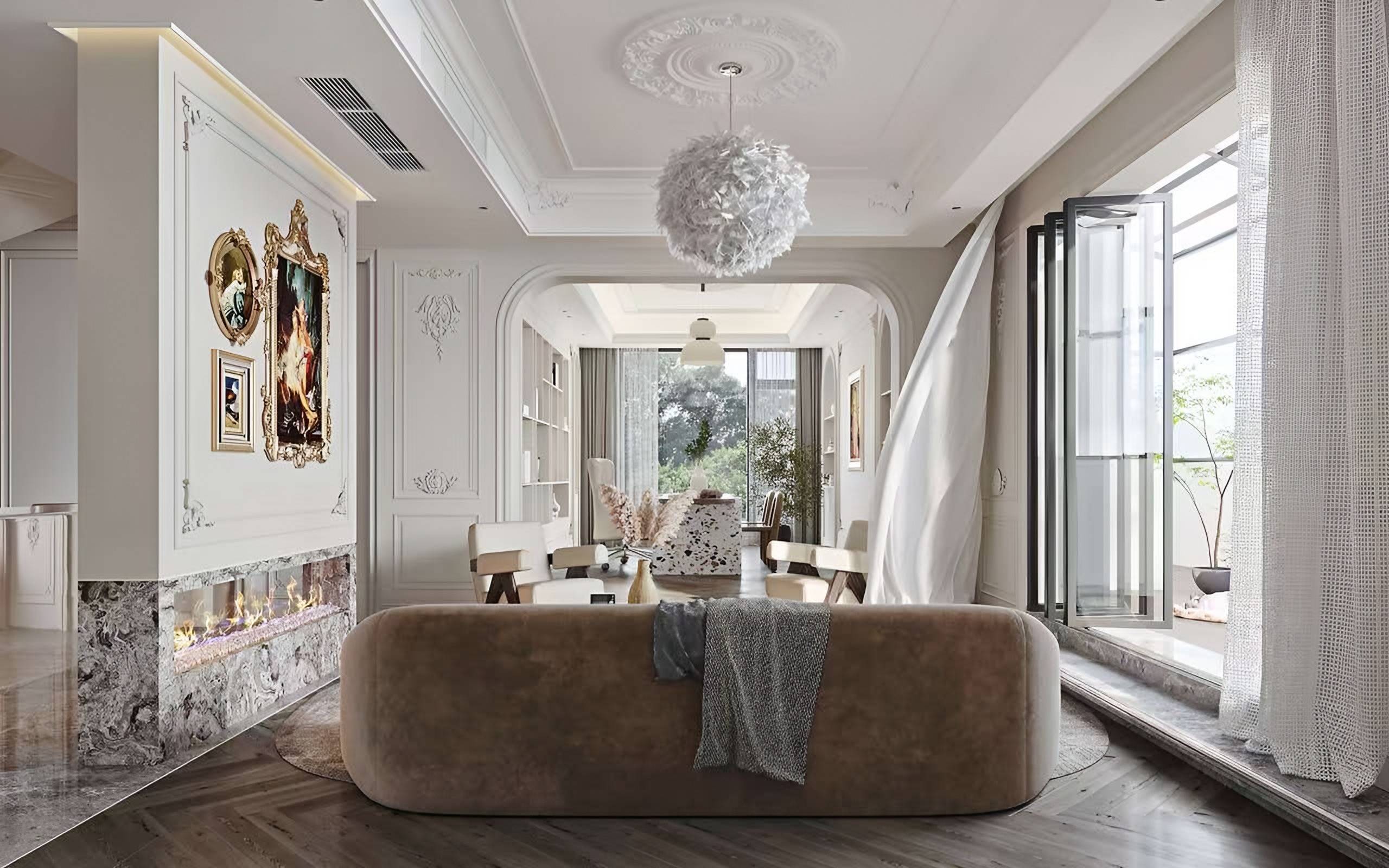
A contemporary classical interior begins with a building that already has character: tall rooms, considered proportions, plaster mouldings, a fireplace that anchors a wall. The aim is not to recreate a period room, nor to strip the architecture bare. It is to keep what gives the space its dignity and to furnish it with pieces that are calm, precise and comfortable by today's standards. The contrast between a carved surface and a clean-lined sofa is what makes the room feel current.
This guide sets out how we approach classical architecture in a bespoke interior: respecting the proportions, scaling the detail, choosing the fireplace and the furniture, and keeping the palette and the lighting in conversation with the rooms.
Start with the architecture
The mouldings, cornices, panelling and fireplace define the room, so the furniture should respond to them rather than fight them. Measure the ceiling height, the position of windows and doors, and the depth of any reveals or recesses. Note which architectural elements are original and which were added later, since they may need different treatment. A furniture plan that ignores the proportions of the room will look awkward however beautiful the individual pieces are.
Scale the detail to the room
Classical detail depends on scale. A cornice or moulding that suits a high drawing room can overwhelm a smaller one, and a shallow profile can disappear in a large space. When new mouldings are proposed, study the existing ones and match their proportions, or deliberately simplify them so that they read as a modern interpretation. Plaster mouldings and timber panelling give the most convincing results; lighter alternatives are sometimes used, but their finish and fixing must be checked carefully. Any work to walls, ceilings or fixings is building work and should be carried out by licensed professionals.
The fireplace as the anchor
A fireplace is the natural focal point of a classical room, and it shapes the arrangement of seating. A marble or stone surround provides weight and colour, while a simple, linear fire or a modern insert can give a clean contemporary note. The seating should be arranged to face the fireplace, or to relate to it comfortably, leaving clear routes around the room. The Classical Residence is built around plaster mouldings and marble fireplaces, and its interiors pair those features with a contemporary way of living.
Pair the modern furniture with the classical walls
Modern furniture works well in classical rooms when its scale and lines are chosen with care. A curved sofa or a low, sculptural armchair contrasts with straight cornices and panelled walls, and that contrast gives the room life. Choose pieces with a visible quality of making: well-proportioned legs, fine joinery, and upholstery that looks as though it was considered. Avoid heavy reproduction furniture that copies period styles too closely, since it tends to make the room feel like a set rather than a home.
The salon of the Classical Residence shows this pairing well: a curved sofa and a veined marble fireplace sit within framed mouldings, and a sculptural pendant is part of the composition. Each element is clearly contemporary, and the room still reads as classical.
A restrained palette
Classical rooms often suit a palette with depth: deep greens, burgundy, ivory, taupe and warm bronze. These colours flatter plaster and stone and give the mouldings light and shadow. Contemporary furniture can be introduced in similar colours, or in one contrasting tone that picks up a detail in the fireplace or the ceiling. Keep the number of colours limited, and let the architecture carry much of the visual interest.
Lighting that respects the ceiling
Lighting in a classical room should reveal the architecture as well as the furniture. A pendant or chandelier at a scale suited to the room, with a shade or form that is modern in character, can echo the proportions of the ceiling without copying its ornament. Wall lights can be placed to lift the mouldings, and concealed sources can wash a cornice or a panel with soft light. Dimmable controls allow the room to shift from formal to relaxed in the evening.
Art, rugs and the finishing layer
Art is traditionally hung in classical rooms, and it can be used to carry a modern voice: a large contemporary painting or a sculptural piece on a plain wall sits well against detailed plaster. Rugs should be chosen for their scale and their relationship to the seating, and a rug with a subtle pattern can support the classical character without becoming busy. Keep the number of objects modest, so that the room feels composed rather than furnished for display.
Pitfalls to avoid
- Pastiche: reproduction furniture and faux antiques can make a room feel theatrical.
- Over-decoration: too many ornaments compete with the mouldings and the fireplace.
- Mismatched scale: small mouldings in a large room, or heavy furniture in a modest space.
- Cold modernity: removing all the character of the architecture leaves a room without warmth.
- Unresolved lighting: a single ceiling fitting ignores the mouldings and the walls.
A checklist for the room
- Surveyed the proportions, ceiling height and original architectural features.
- Decided whether mouldings are original, restored or newly made, and to what scale.
- Arranged the seating in relation to the fireplace and the room's routes.
- Chosen modern furniture with visible quality and a scale that suits the walls.
- Limited the palette to a few colours that flatter plaster and stone.
- Planned lighting that reveals both the architecture and the furniture.
Contemporary classical interiors reward careful planning, because the architecture and the furniture must be designed in relation to each other. If you are considering this approach for your home, start a project with a measured plan, photographs of the architectural details and a few references that feel right. We will plan the furniture, joinery and lighting around the building you have.
Continue reading
Tell us about your space.
Share your floor plan, room photographs and what you hope to create.