How to Choose the Right Rug Size
A rug is the element that holds furniture together. Chosen too small, it makes a room look scattered; chosen to the right size, it anchors the seating and sets the scale of the whole space.
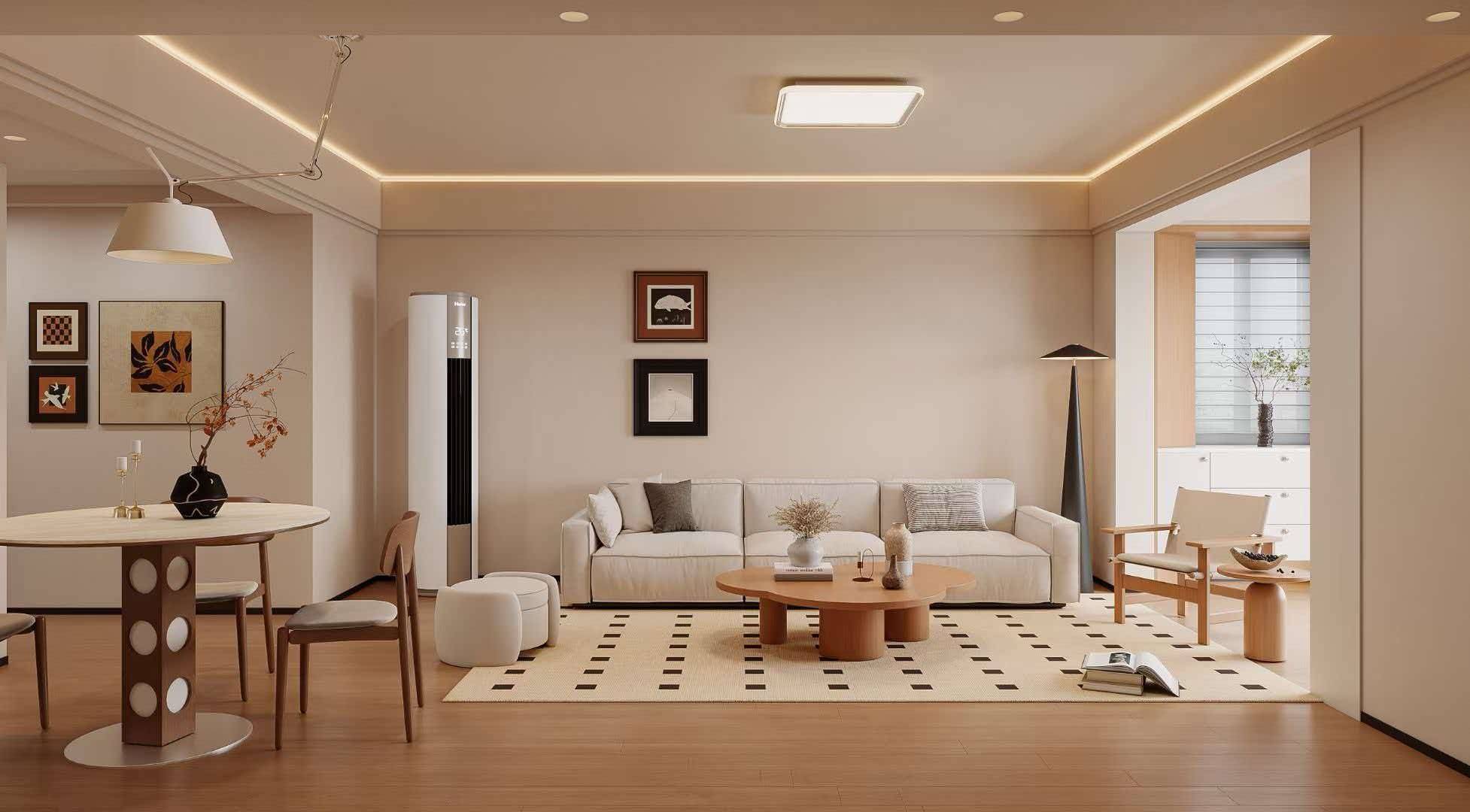
The right rug size depends on the furniture it sits beneath and the way people move around it. A rug that is too small makes every piece look as though it is floating, with the legs of the sofa and chairs sitting on bare floor. A rug that is too large can crowd a room and make walkways feel tight. The aim is a rug that gathers the furniture into one group and leaves a clear margin of floor around it, so that the room reads as deliberate rather than accidental.
This guide sets out the practical rules we use when planning rugs as part of a custom soft furnishings scheme, for living rooms, dining rooms and bedrooms, and explains how to test a size before you buy.
Living rooms: gather the seating
In a living room, the simplest test is whether the front legs of every seat sit on the rug. This keeps the sofa and armchairs in one visual group and lets the rug frame the conversation. A common guideline is to let the rug extend beyond the ends of the sofa by a margin of around 15 to 30 centimetres, so that the rug reads as a deliberate base rather than a patch under the middle of the seating. Where the room is larger, the whole seating arrangement can sit on a single larger rug, with the coffee table also on it.
- Sofa only: the front legs sit on the rug, with the rug extending past each end of the sofa.
- Sofa and two armchairs: the rug is large enough for all three to sit on it, or at least their front legs do.
- Separate seating groups: each group gets its own rug, or a single larger rug is used to unite them.
- Coffee table: it should sit on the rug entirely, or at least with its nearest edge on it, to keep the group together.
A small rug floating in front of a large sofa is one of the most common errors. If the room cannot take a larger rug, consider a smaller sofa or a rug that extends only under the front of the seating, with the coffee table set at a clear distance so the arrangement still reads as a group.
Dining rooms: allow for chairs when pulled back
In a dining room the rug must allow for the chairs. When a guest pulls a chair back from the table, its back legs should remain on the rug, otherwise the chair catches on the edge or sits on the floor boards, which is awkward for everyone. A common guideline is a margin of around 60 to 90 centimetres beyond the table edge on each side, to allow a chair to be pushed back and a person to stand up. Round tables take a round rug, and rectangular tables take a rectangular one whose proportions follow the table.
Measure the table and the chairs together, with the chairs at the position they will be used. Then add the margin on every side. Check the same measurement on the side where a sideboard or bench sits, since the rug should extend under its legs if it stands on the floor.
Bedrooms: frame the bed
In a bedroom the rug usually sits beneath the bed and extends beyond it on the sides and the foot, so that feet land on a soft surface when stepping out. A common guideline is to let the rug extend around 40 to 60 centimetres beyond each side of the bed and the foot, though the margin depends on the room and the amount of floor you want to keep visible. A rug that runs under the whole bed, including the bedside tables, creates a calm, unified base. A smaller rug or a pair of runners on each side is an alternative where the room is tight or the bed is pushed against a wall.
Hallways and corridors
A runner suits a hallway or a long corridor. Its width should be proportionate to the space, leaving a clear margin of floor at each side, and its length should follow the route so that people walk along it rather than across it. In a long, narrow room, a runner can also define a path through the furniture, as in a living room where the seating is set along one side.
Shape, pile and pattern
The shape should follow the room and the furniture. Rectangular rugs suit rectangular rooms and rectangular seating; round and oval rugs soften the lines of a round table or a curved sofa. Pile changes the feel: a low pile or flatweave is practical in busy rooms and under dining tables, while a deeper pile adds warmth to a bedroom or a reading corner. Pattern should be used with restraint when the upholstery and curtains are also patterned. As a general approach, let one or two surfaces carry the pattern, and keep the rest of the room calmer.
In the Warm Family Apartment, a checked rug sits beneath a cream sofa and a timber coffee table, which shows how a patterned rug can anchor a relaxed scheme when the surrounding textures stay soft. The rug is large enough to bring the seating together.
How to test a size before you buy
Measurements on paper are useful, but a size is easiest to judge on the floor. Mark the proposed rug on the floor with masking tape, or cut a template from kraft paper or cardboard to the exact dimensions. Set out the furniture on it and walk around the arrangement. Sit on the sofa, pull out a dining chair, and carry a tray past the table. Look at the room from the entrance and from the seats, and note whether the rug feels too small, too large, or just right.
- Measure the furniture and the room, including doorways and any radiators.
- Decide which pieces must sit on the rug, and which can stand beside it.
- Add the margin on each side, using the guideline for the room.
- Mark the size on the floor with tape, and place the furniture on it.
- Live with the test for a few days, and walk around it at different times of day.
Layering and finishing
A rug can be layered over a larger, neutral base, or a smaller, patterned rug can be placed on top of a plain one to add interest. Layering works best with thin rugs, so that the edge does not trip anyone, and with rugs of similar colour temperature so that the composition feels unified. Check that the rug sits flat on the floor and that its backing grips the surface, especially on polished timber or stone floors. Under-floor heating can change how a rug feels and how it should be cleaned, so check the rug's care guidance against the floor you have.
A checklist before you order
- Chosen which furniture must sit on the rug, and which can stand beside it.
- Added a margin on each side that suits the room's use.
- Tested the size on the floor with tape or a template.
- Checked the shape against the table, the sofa and the room's proportions.
- Chosen a pile and material that suit the traffic in the room.
- Confirmed the rug will lie flat on your floor and suit any underfloor heating.
A well-sized rug is one of the quickest ways to make a room feel resolved. If you are planning the soft furnishings for a room, tell us about your space with a floor plan and the furniture you have or intend to buy. We will recommend the size, shape and pile to suit the room, and bring it into the wider scheme of curtains, upholstery and lighting.
Continue reading
Tell us about your space.
Share your floor plan, room photographs and what you hope to create.