Choosing Wood Finishes: Oil, Lacquer and Wax
The finish decides how timber looks, feels and ages. Oil, lacquer and wax each protect in a different way, and each asks for different care over the years.
A finish on timber does three jobs at once. It protects the wood from water, stains and wear; it changes the colour and depth of the grain; and it controls how the surface feels under the hand. Oil, lacquer and wax are the three families most often discussed for furniture, and they behave very differently. Choosing between them is less about which looks best in a photograph and more about how the piece will be used, how much maintenance you are prepared to give it, and how you want it to change over the years.
This guide compares the three finishes as we consider them when designing custom wood furniture, and sets out the questions to ask before choosing.
What a finish actually does
Wood is a living material that absorbs and releases moisture, so no finish makes it indifferent to its environment. A finish can slow the exchange of moisture, resist spills and stains, and reduce the wear that comes from handling. It can also add colour, from a barely perceptible warmth to a deep tone. Some finishes sit within the timber, while others form a layer on top of it. That difference, more than any other, determines how the finish feels, how it wears and how it can be repaired.
Oil: natural feel and simple repair
Oil finishes soak into the surface and harden within the fibres of the timber. The result is a matt to satin sheen, a surface that feels like timber rather than a coating, and a grain that looks open and natural. Oils are usually applied in several thin coats, with each coat wiped off before it dries. They are the most natural option, and they are the easiest to repair: a worn area can be lightly sanded and re-oiled without refinishing the whole piece.
The trade-off is protection. Oil resists water and stains less than a film finish, and it needs regular upkeep, usually a light reapplication over time, especially on tabletops and surfaces that take daily use. Oils also darken or warm the timber more than some other finishes, which many people value as part of the material's character. Test oil on a sample of the same timber, since the colour change depends on the species.
Lacquer: protection and a defined sheen
Lacquer, usually applied as a clear coating in several layers, forms a protective film on top of the wood. It is hard, resistant to water and spills, and easy to wipe clean. Lacquer comes in gloss, satin and matt sheens, and it gives a smooth, even surface that suits cabinetry, doors and furniture that must look precise. For this reason it is often used on fronts and panels that need a consistent appearance across a run of joinery.
The trade-off is that the finish sits on the surface. Deep scratches, dents or heat marks can break the film, and repairing them is harder than with oil because the damaged area must be carefully sanded and recoated so that the sheen and colour match. A glossy lacquer shows fingerprints and fine scratches more than a matt one. As with any finish, the quality depends on preparation: a poorly sanded timber or a rushed coat will show.
Wax: softness and a hand-finished look
Wax finishes are usually applied over a sealed or oiled base, or sometimes directly to the timber. They produce a soft, low sheen with a warm, tactile feel that many people find the most pleasant to touch. Wax brings out the depth of the grain and gives an old-fashioned quality that suits traditional and country-leaning schemes. It is often used on furniture, panelling and detailing where the look and feel matter more than heavy protection.
Wax offers the least protection of the three when used alone. It resists water poorly and marks more easily, and it needs regular reapplication to keep its appearance. For this reason wax is often combined with oil, in what is sometimes called a hard wax oil finish, which gives more durability while keeping the natural feel. Ask a maker exactly what has been applied, since the names of finishes are not always used consistently.
Comparing the three in daily use
- Protection against water and stains: lacquer is strongest, oil is moderate, and wax alone is the least protective.
- Feel: oil and wax feel closest to bare timber, while lacquer feels like a smooth, sealed surface.
- Repair: oil and wax can be spot-repaired more easily; lacquer repairs need more skill to match.
- Maintenance: oil and wax need periodic reapplication; lacquer is largely maintenance-free until it is damaged.
- Appearance over time: oil and wax typically develop a patina with use; lacquer keeps its surface more constant but shows wear differently.
Matching the finish to the piece
The right finish depends on the piece. A dining table or a desk that receives daily use, drinks and hot dishes usually benefits from a finish with good resistance, or from an oil that is maintained regularly. A cabinet front in a kitchen or bathroom, where moisture and cleaning are constant, often suits a lacquer. A sculptural side table, a panel or a piece that is rarely touched can be finished in oil or wax to show the timber at its most natural.
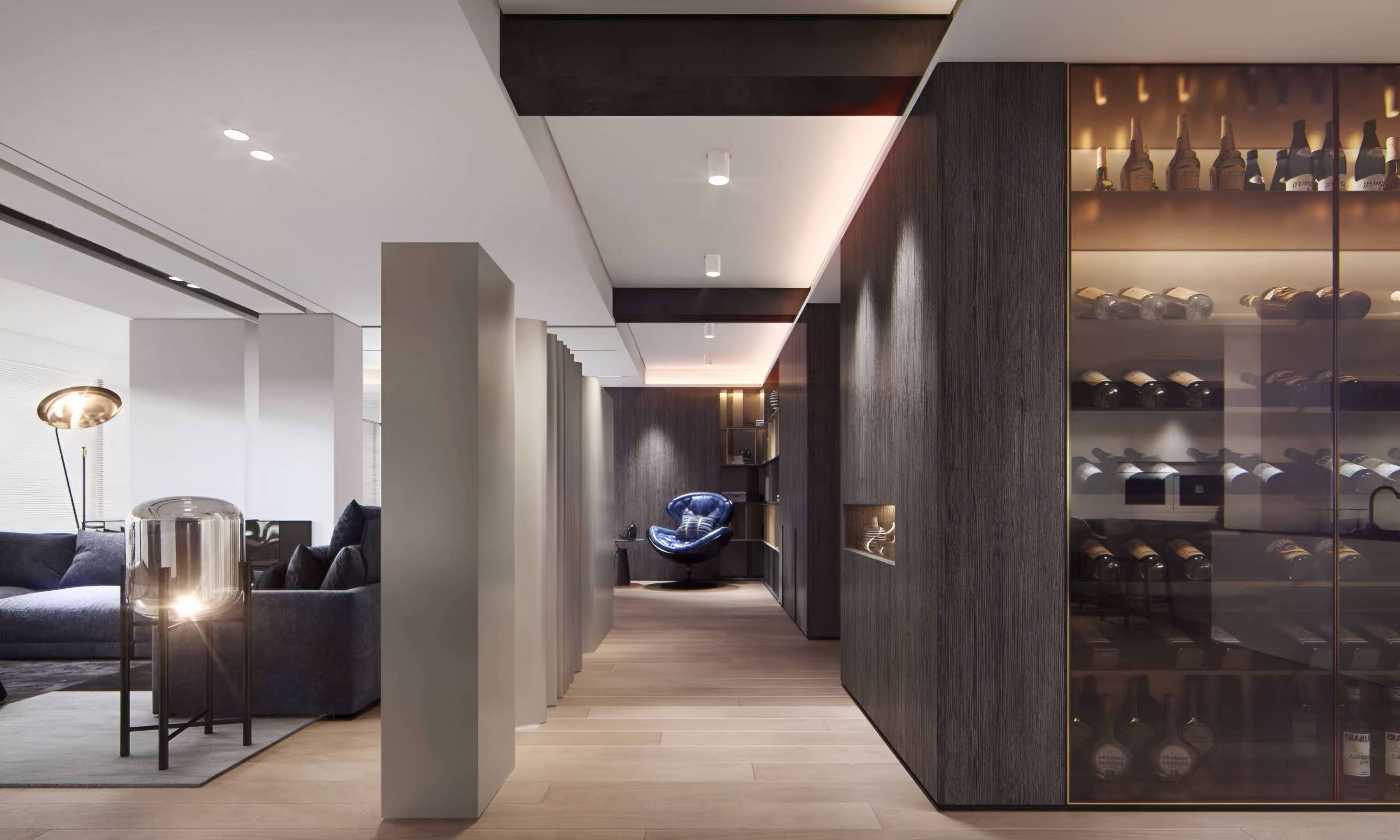
The dark timber cladding in the Dark Timber Apartment shows how a deep-toned timber can make a hallway feel warm and enclosed. Surfaces of this scale need the finish applied evenly, so that the colour reads consistently from one panel to the next.
Sampling and testing
Finishes look different on different timbers, and they change under light. Oak, walnut, ash and other species take oil and colour in distinct ways, and the same finish can read warm on one piece and grey on another. Ask for sample boards made from the same timber as the final piece, finished in the proposed system, and view them in the room, in daylight and in the evening. Keep one board for reference, and ask the maker to record exactly how it was made.
- Confirm the species and grain direction of the final piece.
- Compare sample boards of each finish side by side under your own lighting.
- Test the feel: rub each sample with your hand, and note how it responds to a damp cloth.
- Ask how repairs will be carried out, and whether a spare batch or colour record is kept.
- Agree a maintenance schedule with the maker, and write it down for the household.
Caring for the finish
Whatever the finish, care is simpler than people expect. Wipe spills promptly, use coasters and mats, and avoid harsh abrasives or strong solvent cleaners. Oiled and waxed surfaces benefit from a light refresh at the intervals the maker recommends, usually after a period of heavy use or when the surface looks dry. Lacquered surfaces can be cleaned with a soft cloth and a gentle cleaner recommended for the finish. Avoid placing very hot objects directly on any finish, and keep timber away from direct heat and prolonged sunlight, which can alter colour.
If you are considering timber furniture, start a project with a note of how the piece will be used and a photograph of the room, and we will help you choose the species and finish together. Our approach to timber is described in more detail in our material library.
Continue reading
Tell us about your space.
Share your floor plan, room photographs and what you hope to create.